
Corporate Culture
Play Corporate Culture
Corporate Culture Screenshots











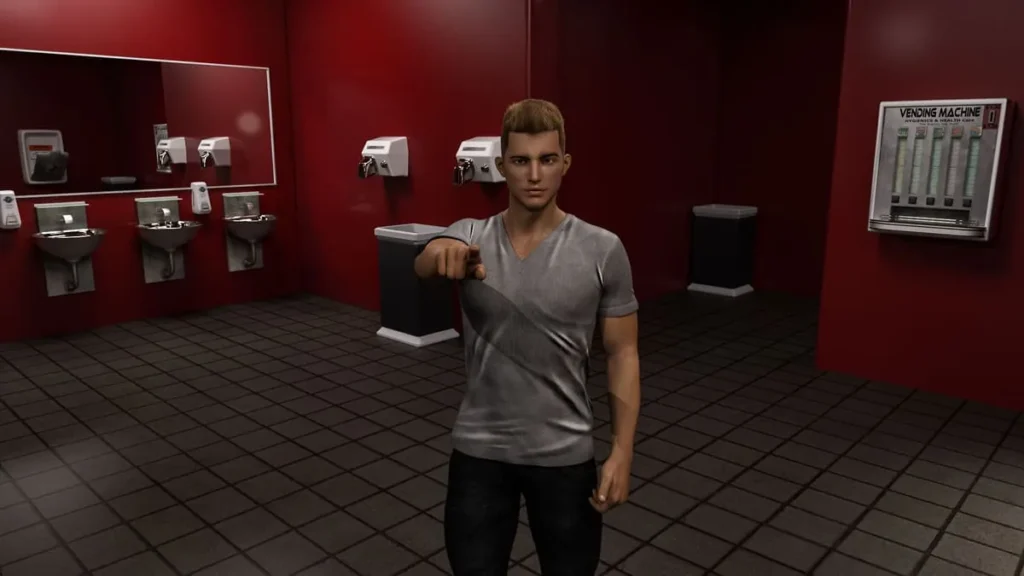









Corporate Culture review
Navigate workplace dynamics through strategic decision-making and relationship management
Corporate Culture stands out as a unique narrative-driven experience that transforms the mundane office environment into a complex web of social interactions and strategic decisions. Unlike traditional games that pit players against clear antagonists, this title focuses on the intricate dynamics of workplace relationships where every conversation carries weight and consequences ripple through your professional journey. The game challenges players to balance ambition with ethics, immediate gains with long-term stability, and personal advancement with workplace harmony. Whether you’re interested in story-rich games, choice-driven narratives, or exploring how games can authentically portray office politics, Corporate Culture offers a compelling examination of how we navigate professional environments.
Understanding the Core Gameplay Mechanics
Forget everything you think you know about office-based games. Corporate Culture isn’t about completing tasks from a checklist or grinding through endless emails until the clock hits five. 🕔 The core of this experience, the beating heart that makes it so uniquely compelling, is its intricate relationship management gameplay. You’re not managing a team of faceless subordinates; you’re navigating a fragile ecosystem of personalities, egos, and unspoken alliances. Every cup of coffee shared, every project collaborated on, and yes, every piece of gossip you choose to spread or ignore is a strategic move. This is an office politics simulation at its finest, where your social capital is your most valuable currency.
In most games, an NPC might thank you for a quest and then forget you exist. Not here. Corporate Culture features a sophisticated NPC relationship tracking system where every character has a detailed, internal ledger of their interactions with you. This isn’t just about a simple “like/dislike” meter. It’s about trust, obligation, perceived competence, and personal affinity. Did you help Alex from Marketing debug their presentation last Tuesday when they were panicking? That’s logged as a social credit. Did you publicly take credit for Sarah’s idea in the big meeting? That’s a major debit, and Sarah will remember.
How Relationship Management Drives the Experience
Think of your workplace relationships in Corporate Culture as a series of emotional bank accounts. 🏦 Every interaction is a deposit or a withdrawal. A genuine compliment, offering help without being asked, remembering a coworker’s personal milestone—these are deposits. Interrupting someone, missing a promised deadline that impacts their work, or throwing them under the proverbial bus—these are significant withdrawals.
The interactive decision systems in the game present you with constant, nuanced choices that affect these balances. It’s not just “Be Nice” or “Be Mean.” It’s a spectrum. Do you:
* Agree to cover for a teammate who’s having a family emergency, even though it will push your own work late?
* Politely deflect your boss’s request to take on another low-priority “passion project” that distracts from your core goals?
* Share a crucial piece of information you overheard with a colleague who could benefit, knowing it might breach an unspoken confidence?
Your approach to this relationship management gameplay defines your entire playthrough. Are you a bridge-builder, investing in everyone to create a web of mutual support? Or are you a mercenary, cultivating only the relationships that offer immediate, tangible benefit? The game refuses to judge you morally. Instead, it presents the complex, often unintended outcomes of your social strategy. This is the essence of its social consequence mechanics—your network of relationships becomes the primary interface through which you interact with the game world.
The Role of Persistent Consequences in Decision-Making
This is where Corporate Culture truly separates itself. The game has a long, impeccable memory. 🤔 Those persistent consequences in games aren’t just a catchy phrase here; they are the architectural foundation. Your choices are not isolated events. They ripple outward, affecting storylines, opportunities, and character behaviors hours or even in-game weeks later. This creates a profound sense of a living, reactive world.
The magic lies in the choice-driven narrative mechanics. There is no single “right” path or golden ending. The narrative branches and evolves based on the reputation you’ve built and the social debts you’ve accrued or called in. A character you slighted early on might become a gatekeeper for a critical promotion later, and their cold demeanor is a direct result of your past action. Conversely, a small kindness shown to an intern could pay off spectacularly when they rise to a position of influence and remember who treated them with respect.
Tip: In Corporate Culture, there are no trivial interactions. The colleague you ignore at the coffee machine today could be the one reviewing your proposal tomorrow.
Let me give you a real scenario from my own playthrough. Early on, I was swamped. My project lead, Amir, casually asked if I could proofread a short client email. I saw it as a low-priority distraction and brushed him off with a quick, “Sorry, swamped!” Fast-forward a month. I needed Amir to approve an urgent expenditure for my own project. The request sat in his inbox for days. When I finally cornered him, he gave me a flat, bureaucratic response about “process” and “budget cycles.” That forgotten favor had created a subtle but persistent consequence. He wasn’t being overtly hostile; he was just… not inclined to go out of his way for me. I had to spend significant social capital with another manager to get the approval pushed through, derailing my timeline. This cascading effect is the brilliance of the game’s social consequence mechanics.
Balancing Professional Competence with Political Savvy
Success in Corporate Culture is a dual-track endeavor. 🏆 You cannot simply be the hardest worker, nor can you skate by on charm alone. You must master the art of balancing raw professional skill with acute political intelligence. The game constantly challenges you to prove your worth through the quality of your output while simultaneously managing the perceptions and relationships that determine your influence.
The most fascinating conflicts arise when these two paths collide. Do you stay late to perfect a report, showcasing your competence but missing a key team-building happy hour? Or do you attend the social event to strengthen alliances, knowing your work will be just “good enough”? The office politics simulation demands you make these trade-offs constantly.
The game recognizes different skillsets. Here are the key skills you need to cultivate to thrive:
| Worker Competence Skills | Political Awareness Skills |
|---|---|
| Meeting Project Deadlines | Reading Room Dynamics |
| Technical Problem-Solving | Strategic Information Sharing |
| Quality of Deliverables | Building & Calling in Favors |
| Efficiency & Time Management | Navigating Formal & Informal Power Structures |
| Mastering Job-Specific Tools | Managing Upwards (Your Boss’s Perception) |
Your performance on tangible tasks affects your reputation for reliability and skill, opening some doors. But it’s your relationship management gameplay that determines who will open those doors for you, who will warn you about pitfalls, and who will support your ideas when it counts. A brilliant proposal can be torpedoed in a meeting by a colleague you unknowingly undermined. Conversely, a mediocre idea can gain traction if it’s championed by a powerful ally you’ve cultivated.
This balance is mediated through the game’s interactive decision systems. You’re not just choosing dialogue options; you’re allocating your most precious resource: time and attention. Every action is an investment in one of these two skill trees. The persistent consequences in games mean that specializing too heavily in one area creates vulnerabilities. The pure politician will eventually be exposed for a lack of substance. The pure workhorse will see opportunities pass them by, awarded to more socially adept colleagues. The most satisfying playthroughs come from finding your own unique hybrid style, where your professional work empowers your political moves, and your political savvy clears the path for your work to shine.
Ultimately, Corporate Culture presents a deeply interconnected system. The relationship management gameplay feeds into the NPC relationship tracking, which dictates the social consequence mechanics of your choice-driven narrative mechanics. All of this is framed within a brutally authentic office politics simulation, driven by interactive decision systems that ensure persistent consequences in games feel earned, meaningful, and endlessly engaging. It’s less a game about work, and more a game about the people you work with—and how you choose to navigate the intricate, unspoken dance of power, collaboration, and ambition that defines modern professional life.
Corporate Culture represents a thoughtful approach to game design that elevates the office setting from a mere backdrop to the central focus of meaningful interaction. By prioritizing relationship management and persistent consequences, the game creates an experience where every decision carries weight and the world responds authentically to player choices. The refusal to impose moral judgment allows players to explore the genuine complexity of workplace dynamics, where success requires balancing professional competence with political awareness. The seamless integration of challenge and narrative creates an immersive experience where the gameplay itself tells the story of navigating human relationships in a corporate environment. For players seeking narrative depth, meaningful choices, and a fresh take on interactive storytelling, Corporate Culture offers a compelling exploration of how games can authentically capture the nuanced dynamics of professional life.