Meeting
Play Meeting
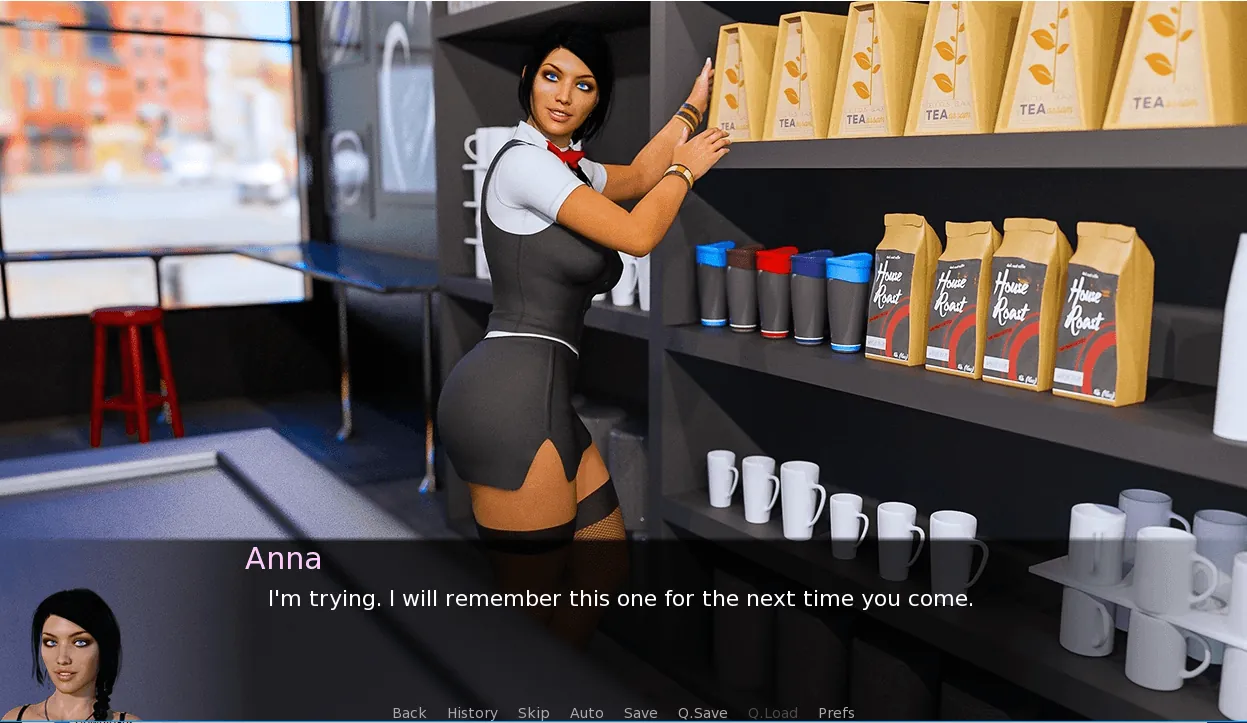
Meeting Screenshots






Meeting review
Master branching narratives, character relationships, and meaningful choices in this immersive interactive experience
Meeting stands out as a captivating interactive experience that blends cinematic storytelling with meaningful player agency. Unlike traditional adult games that rely on passive observation, Meeting immerses you in a world where every dialogue choice, gesture, and decision reshapes your relationships and unlocks unique story paths. Whether you’re exploring space-themed encounters, navigating complex character dynamics, or discovering hidden scenarios, this game delivers rich narrative depth combined with high-quality animations and genuine replay value. If you’re curious about what makes Meeting different from conventional adult games, this guide explores its core mechanics, relationship systems, and the elements that keep players engaged through multiple playthroughs.
Understanding Meeting’s Core Gameplay Mechanics
Let’s be honest: the magic of a great interactive story isn’t just in the writing—it’s in the mechanics that make your choices feel real. 😌 You want to know that your decisions matter, that the digital characters remember if you were kind or cruel, and that the story bends and breaks based on your whims. That’s where Meeting truly shines. It transforms from a simple visual novel into a deeply personal simulation of relationships and consequences through its expertly crafted systems. This chapter is your blueprint to mastering them.
Forget passive reading. In Meeting, you are the author, the director, and sometimes, the architect of your own downfall. 🎭 Every click, every selected line of dialogue, and every interaction is a brushstroke on the canvas of your unique story. We’re going to break down the engine that makes this all possible: the intuitive point and click controls, the nuanced Meeting game dialogue system, the hidden web of character relationship mechanics, and the grand structure of the story progression system. By the end, you’ll not just play the game—you’ll understand it.
How the Dialogue Tree System Works
At the heart of Meeting’s immersive power is its dialogue tree system. Think of it less as a “tree” with simple branches and more like a sprawling, interconnected root system where every choice sends subtle vibrations through the entire narrative. 🪴 Unlike games where dialogue is just flavor text, here, your words are action.
The system is elegantly simple to use but profound in its impact. Using point and click controls, you navigate conversations by clicking on the dialogue option that best reflects your intent. These interactive dialogue choices are rarely just “Good” or “Evil.” Instead, they are shaded with personality and context. You might choose to be professionally detached, warmly friendly, playfully flirtatious, or directly confrontational. Each approach speaks to a different aspect of your character and, more importantly, resonates differently with the person you’re talking to.
Here’s the crucial part: these choices often have immediate and long-term effects. A snappy comeback might win a laugh now but be remembered as a slight later. Offering support in a vulnerable moment might not change the scene you’re in, but it plants a seed of trust that blooms chapters later. This is the essence of branching narrative gameplay—your path forks not at giant, obvious signposts, but with every whispered confidence and every heated argument.
To help you visualize the strategic layer behind conversations, let’s look at how typical choice types can influence your standing. Remember, these are general tendencies; characters in Meeting have their own unique personalities and biases!
| Choice Type | Typical Tone & Example | Primary Affinity Impact | Narrative Outcome |
|---|---|---|---|
| Friendly & Supportive | “I’m here for you. Tell me what’s wrong.” | Builds Trust & Comfort; can increase general “Friend” affinity. | Unlocks deeper personal conversations, access to character backstories, and supportive subplots. |
| Flirtatious & Charming | “I couldn’t help but notice you. Tonight was… memorable.” | Boosts Romantic tension; can trigger specific “Romance” flags. | Opens potential romantic routes, leads to intimate scenes, but may close off platonic paths. |
| Professional & Reserved | “Let’s focus on the task at hand. The report is due Friday.” | Increases Respect; maintains neutral ground. | Keeps relationships formal, advances career or plot-centric storylines, avoids personal drama. |
| Confrontational & Direct | “That was a reckless thing to say. You need to be better.” | Decreases Trust; can increase Fear or Respect depending on context. | Creates conflict-driven plot twists, may lead to dramatic confrontations or hostile endings, and can permanently alter a character’s behavior toward you. |
My first playthrough taught me this the hard way. I was chatting with a character who was being prideful and stubborn. 🤨 I had the option to gently coax them into admitting a mistake or to call them out bluntly. Thinking I’d be “honest,” I chose the blunt option. It felt powerful in the moment—they backed down. But what I didn’t see was the hidden switch that flipped. That single interactive dialogue choice didn’t just end that conversation; it marked me in their mind as unsympathetic. Later, when I needed their help for a critical story event, they refused. Their entire subplot, full of content and a potential alliance, was locked away because of my tone weeks of game-time earlier. That’s the weight Meeting gives your words.
Mastering the Affinity and Reputation System
If the dialogue tree is the visible conversation, the affinity system is the invisible, beating heart of Meeting. This is where the game elevates itself within the genre of affinity system adult games. It’s not just one “like” meter. 😮 Each major character has a complex set of hidden values tracking your relationship across multiple dimensions, such as Trust, Attraction, Respect, and Familiarity.
These aren’t just numbers that go up and down—they form a dynamic personality profile that you are crafting for the protagonist in the eyes of others. This suite of character relationship mechanics determines everything:
* Which scenes you unlock: High Trust with one character might lead them to invite you to a private confession. High Attraction with another might unlock a romantic encounter.
* How characters behave toward you: They might share secrets, come to your defense, or make a pass at you, all based on these hidden scores.
* Which endings are available: The game’s conclusion isn’t a single scene with variants. It’s a culmination of which relationships you’ve nurtured, which you’ve burned, and your overall reputation.
🚨 Pro Tip: There is no “perfect” playthrough. Maximizing affinity with one character often means making choices that lower it with another, especially if they have conflicting goals or personalities. You are constantly defining who you are in this world.
The system is brilliantly opaque. You won’t see a numerical meter on screen. Instead, you must read the subtext: a character’s body language, the tone of their responses, and the opportunities that do (or don’t) present themselves. This turns every playthrough into a process of discovery and makes your choices feel organic, not like you’re just ticking boxes for points.
Let’s talk about that practical example I promised. Early in the game, you meet a sensitive, artistic character who is shyly showing you their work. 🎨 In your dialogue options, you can choose to be:
1. Encouraging and thoughtful (increases Trust/Familiarity).
2. Playfully teasing (a gamble—could be seen as endearing or dismissive).
3. Flippant and unimpressed (decreases Trust and Respect).
On my second playthrough, just to test the limits, I chose the flippant option. I said something like, “Is that what they call art these days?” I got a small, sad sprite change and the conversation moved on. No big warning sign flashed. But I had, without question, triggered a permanent flag. That character never again approached me to share anything personal. Their entire storyline—involving several emotional scenes, a key piece of the game’s lore, and a potential deep connection—vanished. One off-hand, thoughtless comment in Act 1 completely locked me out of their entire route. This is Meeting’s core philosophy: your social capital is real, and it can be spent or burned with a single sentence.
Navigating Scenes and Unlocking Content
Meeting’s world isn’t just a series of conversation boxes. It’s an environment to explore, and this is where the classic point and click controls come into their own. 🖱️ Many scenes present you with a detailed background. The story progression system often structures this into a “day” or “chapter,” giving you a limited amount of in-game time to interact with your surroundings and the people in it.
This exploration is active, not passive. Clicking on a character will, of course, initiate conversation. But the real magic happens when you click on environmental elements. A book on a shelf might trigger a line of dialogue about your shared taste in literature, boosting affinity. A half-finished drink at a bar might let you make a comment that reveals your observational skills. Clicking on a photo in someone’s apartment could unlock a crucial backstory conversation that would otherwise remain hidden.
This mechanic directly feeds the branching narrative gameplay. The content you unlock isn’t just “extra.” It often provides critical context, alternative solutions to problems, or the key to a character’s heart. It reinforces the idea that being curious and engaged with the world is rewarded. Maybe you find a lost item that belongs to a colleague, giving you a perfect reason to start a conversation the next day. Perhaps you notice a detail in an email on a computer screen that warns you of a future betrayal.
The story progression system ties all this together. Relationships build over simulated days and weeks. You can’t max out a romance in one afternoon; it requires consistent attention, remembering past conversations, and following up on promises. The game structures major narrative beats at the end of chapters, where the state of your relationships is assessed. Who will side with you in a crucial meeting? Who will you spend a pivotal evening with? Who might betray you because you neglected their concerns? These climaxes are determined by the sum of all your tiny interactions—the chats, the explored items, the chosen dialogue paths.
In essence, playing Meeting is like tending a delicate garden. 🌷 You plant seeds with your interactive dialogue choices, you water them through attentive exploration, and you nurture them over time via the story progression system. You watch for the subtle growth in the character relationship mechanics, and you eventually reap a harvest that is uniquely yours—a story shaped not by a single grand decision, but by the thousand small ones you made along the way. This interconnected web of dialogue, affinity, and exploration is what makes mastering Meeting’s core mechanics such a profoundly satisfying interactive experience.
Meeting represents a significant evolution in interactive adult gaming, combining sophisticated narrative design with genuine player agency. The game’s strength lies not in any single element but in how seamlessly it integrates branching storylines, meaningful dialogue choices, character relationship systems, and high-quality production values into a cohesive experience. Whether you’re drawn to the complex emotional narratives, the satisfaction of discovering multiple story paths, or the immersive character interactions, Meeting delivers on its promise of personalized, consequence-driven gameplay. The exceptional replay value stems from the game’s commitment to making player choices matter—every dialogue selection, relationship decision, and action ripples through the narrative in ways that feel authentic rather than predetermined. If you’re seeking an adult game that respects your intelligence and time investment while delivering genuine entertainment and emotional engagement, Meeting offers a compelling experience worth exploring. Start your journey by understanding the dialogue system, experiment with different character approaches, and embrace the freedom to shape your own unique story.